BIQU CryoGrip Pro Glacier Build Plate earns our recommendation for the Best 3D Printer Build Surface thanks to its unique hollow-out handle design that allows for rapid removal without requiring the plate to cool down completely.
Selecting a reliable platform involves balancing first-layer adhesion against the ease of part removal. While some surfaces prioritize extreme grip for high-temperature filaments, others focus on providing a smooth finish or specialized textures that simplify the post-printing workflow.
Experienced users should consider how a specific plate interacts with their printer's bed detection systems and heating requirements. Choosing the right surface often means matching the substrate material to your most frequently used filament types to ensure consistent results.
Upgrading your platform is a common way to enhance the performance of your Best 3D Printer setup. For those looking to further optimize their workflow, exploring the Best 3D Printer Accessories can provide additional tools for maintenance.
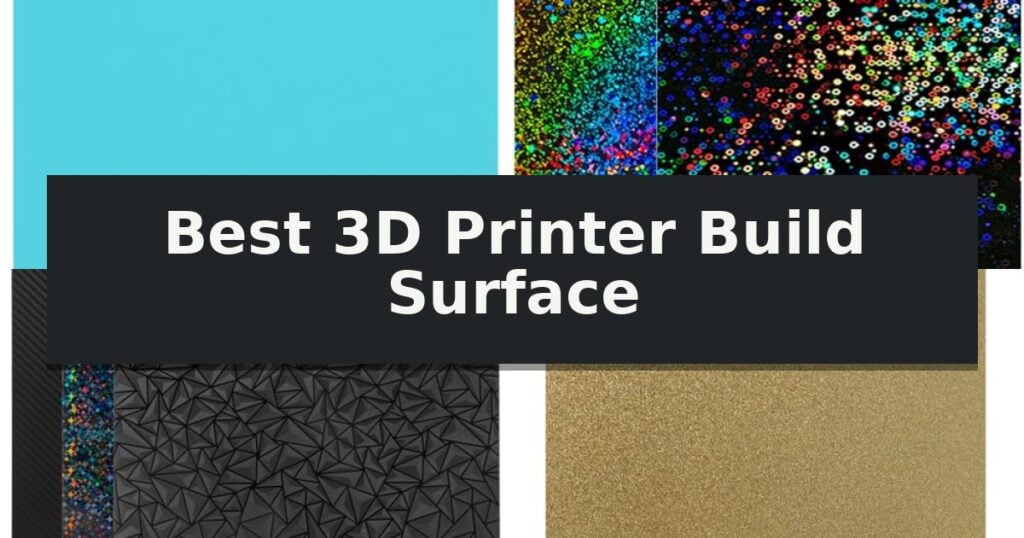
10 Best 3D Printer Build Surface in 2026 Reviews
Quick Comparison
| Product | Best For | Key Strength | Score |
|---|---|---|---|
| BIQU CryoGrip Pro Glacier Build Plate | Best Overall | Hollow out handle design allows for safe handling at high temperatures. | 4.9 |
| Wefuit Holographic Texture Build Plate | Adds Unique Holographic Patterns | Dual-pattern holographic design for unique print aesthetics. | 4.6 |
| ELEGOO Flexible Magnetic Build Plate | Versatile Multi-Texture Printing | Triple-pack versatility offering three unique surface textures (PEO, PEY, PET). | 4.7 |
| AJOYIB Flexible PEI Build Plate | High-Temperature Resistant Surface | Double-sided PEI coating for extended surface life. | 4.7 |
| Comgrow Magnetic 3D Printer Build Surface | Reliable Universal Magnetic Base | Flexible design allows for effortless model removal by bending the plate. | 4.9 |
| Creality Ultra-Flexible Magnetic Build Surface | Durable Official Replacement Surface | Removable magnetic design eliminates the need for scraping tools. | 4.7 |
| Yimaitong Spring Steel Build Plate | Smooth Dual-Sided Printing | Dual-sided smooth surface for versatile printing options. | 4.8 |
| Magigoo All-in-One Bed Adhesive | Essential First Layer Security | Broad compatibility with multiple filament types including ABS, PLA, PETG, HIPS, and TPU. | 4.6 |
| Black Magic Bed Adhesive Kit | Mess-Free Precision Application | Precision Foam Applicator prevents mess and ensures uniform coverage. | 4.3 |
| TEQStone 3D Printer Glue Stick | Cost-Effective Adhesion Solution | Improved adhesion reduces printing errors and deformation. | 4.3 |
How We Chose
When evaluating the best 3D printer build surface, we focus on how effectively a platform balances secure first-layer adhesion with the mechanical convenience of part removal. An experienced reviewer prioritizes material longevity, thermal stability across various filament types, and seamless integration with existing printer hardware to ensure a reliable, high-quality printing experience.
- Surface Adhesion Performance
- Material Compatibility and Temperature Rating
- Ease of Model Removal
- Durability of Coating and Substrate
- Compatibility with Printer Bed Sensors
1 BIQU CryoGrip Pro Glacier Build Plate — Best for Rapid Model Removal
Efficiently managing your 3D printing workflow requires hardware that minimizes downtime, and the BIQU CryoGrip Pro Glacier Build Plate addresses this through a specialized hollow out handle design. This feature allows for immediate removal of the build plate from the hot bed even when operating at 100°C, enabling users to swap surfaces and initiate new prints without waiting for the platform to cool.
The build plate utilizes a sophisticated 7-layer cobalt oxide coating structure, which includes a dedicated base, intermediate, and top coat. This construction is engineered to be both impact and corrosion resistant, providing a durable surface that resists peeling even with repeated bending. The surface texture is specifically designed to produce a smoother finish on the bottom of printed parts.
Engineered for reliability, the substrate features high magnetism to ensure strong adsorption and fixation during the printing process. This design helps limit stress warping, which is a common factor in print failures. The plate is compatible with a wide range of filaments including PLA, PETG, ABS, and PA, though users should note that adhesion characteristics vary by material.
Integration with existing hardware is streamlined by the inclusion of an AR code that is compatible with X1 build plate locating scans. This allows for automated verification, and users have the flexibility to select their own AR code to prevent error messages when using high-temperature materials on settings typically reserved for standard build plates.
Best for: Users who require rapid turnaround times between 3D prints and want to avoid waiting for the build plate to cool down.
Skip if: Users primarily printing with PLA or PETG who prioritize maximum adhesion over the convenience of rapid plate removal.
- Hollow out handle design allows for safe handling at high temperatures.
- 7-layer cobalt oxide coating ensures long-term durability and resistance to peeling.
- High magnetism provides strong first-layer adhesion to reduce warping.
- Integrated AR code simplifies printer compatibility and verification.
- Lower adhesion for PLA and PETG compared to other specialized surfaces like the Frostbite model.
2 Wefuit Holographic Texture Build Plate — Adds Unique Holographic Patterns
The Wefuit Holographic Texture Build Plate introduces a dual-pattern design to your 3D printing setup, featuring both Circle and Star textures that shift in appearance depending on lighting conditions. This 257x257mm platform is engineered for versatility, allowing users to achieve unique aesthetic finishes on their prints while maintaining the convenience of a removable spring steel sheet.
Built for durability and consistent performance, the plate is designed to remain flat even after repeated heating cycles, which helps minimize warping during the printing process. Once the print is complete and the surface has cooled, the flexible nature of the spring steel allows for easy model removal without the need for excessive force.
This build surface is rated for high-temperature resistance up to 200°C and is compatible with a variety of filaments, including PLA, TPU, PETG, and ABS. To maintain the integrity of the holographic patterns, the manufacturer recommends simple maintenance: wiping the surface with a wet paper towel followed by a dry one to remove oils or fingerprints, ensuring the plate remains clean for subsequent prints.
Compatibility is broad across the Bambu Lab ecosystem, specifically fitting the X2D, P2S, X1, X1C, X1E, P1P, P1S, and A1 models. Users should select the "Smooth PEI Plate/High Temp" setting in their slicer software to ensure proper adhesion. For those utilizing the X1 series, it is recommended to disable the "Enable detection of build plate position" feature for optimal operation.
Best for: Users seeking to add unique holographic visual effects to their 3D prints while utilizing a durable, flexible spring steel platform.
Skip if: Users who require a standard, non-textured surface or those who are unwilling to adjust slicer settings and printer configurations for compatibility.
- Dual-pattern holographic design for unique print aesthetics.
- Flexible spring steel construction for easy model removal.
- High-temperature resistance up to 200°C.
- Wide compatibility with multiple Bambu Lab printer models.
- Requires specific slicer settings to ensure proper adhesion.
- Manual adjustment of printer settings may be necessary for specific models.
3 ELEGOO Flexible Magnetic Build Plate — Versatile Multi-Texture Printing
Achieving consistent print quality often hinges on the foundation of your 3D printer, and the ELEGOO Flexible Magnetic Build Plate offers a versatile solution for those looking to upgrade or replace their existing platform. This kit includes three 256 x 256 mm plates specifically designed for the Centauri Carbon series, providing a comprehensive set of surfaces to experiment with different material finishes.
Each plate features a double-sided design that maximizes utility. One side is coated in PEI, known for its reliable adhesion properties, while the reverse side provides a choice between three distinct textures: Diamond (PEO) for a smooth finish, Starry (PEY) for a shimmering effect, and Carbon Fiber (PET) for a matte aesthetic. This variety allows users to tailor the surface finish of their prints without needing to swap hardware entirely.
Constructed from spring steel with an integrated magnetic base, these plates are engineered for convenience. The flexible nature of the steel allows for effortless print removal; once the plate cools, a simple bend is usually enough to pop the model off the surface. This design helps maintain the integrity of the print and the plate itself over time.
The system is optimized for common filaments like PLA and PETG, helping to minimize common issues such as warping or edge lifting. By providing a stable, high-quality base, these plates aim to ensure consistent results from the first layer to the last. Each set is also securely packaged with foam padding to prevent damage during transit.
Best for: Users of the Centauri Carbon 3D printer who want to experiment with multiple surface finishes and require a reliable, easy-to-remove build platform.
Skip if: Users who do not own a printer compatible with the 256 x 256 mm dimensions or those who only require a single, standard PEI surface without the need for decorative textures.
- Triple-pack versatility offering three unique surface textures (PEO, PEY, PET).
- Flexible spring steel construction for easy, damage-free print removal.
- Double-sided design featuring reliable PEI on one side for consistent adhesion.
- Secure packaging ensures the plates arrive in pristine condition.
- Specific size compatibility limited to 256 x 256 mm platforms.
- Requires magnetic base installation if the printer is not already equipped.
4 AJOYIB Flexible PEI Build Plate — High-Temperature Resistant Surface
Maintaining consistent adhesion during 3D printing often hinges on the quality of your print surface, and the AJOYIB Flexible PEI Build Plate offers a specialized solution for users of the Bambu Lab A1 mini. This double-sided plate features a PEI coating applied to both sides of a metal sheet, providing a durable foundation for various filaments including PLA, ABS, TPU, PC, and PETG.
Designed for versatility, the plate supports high-temperature printing with a maximum heat resistance of 260°C. The flexible nature of the metal sheet simplifies post-print processing; once the bed cools, the printed model typically releases naturally, allowing for easy removal without the need for excessive force.
Integration requires careful attention to printer calibration. Because the thickness of the AJOYIB Flexible PEI Build Plate differs from standard surfaces, users must perform a re-leveling of the print bed to ensure optimal nozzle height. The manufacturer recommends leaving a small gap of 0.1-0.2mm during this leveling process to protect the surface and achieve the best results.
This 184x184mm plate is specifically sized for the Bambu Lab A1 mini and other printers sharing identical hot bed dimensions. By utilizing a flexible, bendable design, it addresses common challenges associated with rigid build plates, making it a practical upgrade for those seeking reliable adhesion and straightforward model removal.
Best for: Owners of the Bambu Lab A1 mini or printers with a 184x184mm bed looking for a flexible, high-temperature resistant surface.
Skip if: Users who are uncomfortable with or unable to perform manual bed re-leveling to accommodate the specific thickness of this plate.
- Double-sided PEI coating for extended surface life.
- High-temperature resistance up to 260°C.
- Flexible metal design allows for easy model removal.
- Compatible with a wide range of common 3D printing filaments.
- Requires manual re-leveling of the printer bed after installation.
- Specific 184x184mm size limits compatibility to exact-match printer models.
5 Comgrow Magnetic 3D Printer Build Surface — Reliable Universal Magnetic Base
Achieving a reliable grip for 3D prints often hinges on the quality of the print bed, and the Comgrow Magnetic 3D Printer Build Surface offers a specialized solution for users seeking easier model removal. This system utilizes a two-part design consisting of a lower magnetic base with 3M adhesive and a flexible, removable upper build plate.
The primary advantage of this surface is its flexible construction, which allows users to physically bend the plate after a print is complete. This mechanical action helps pop models off the surface without requiring excessive force or sharp metal tools that could damage delicate prints. It is recommended to heat the bed for 2-3 minutes prior to removal to ensure optimal release.
Installation is designed to be straightforward, though it requires attention to the magnetic orientation. If the upper and lower layers do not adhere immediately, rotating the top surface 90 degrees typically resolves the alignment. Because the material is customizable, it can be trimmed to fit various FDM printer bed dimensions, making it a versatile choice for different hardware setups.
This build surface is compatible with both heated and non-heated beds, providing a consistent platform for various filament types. By providing a dedicated, removable interface, it reduces the wear and tear on the printer's primary build plate while streamlining the post-printing workflow.
Best for: Users looking to simplify model removal on FDM printers through a flexible, magnetic interface.
Skip if: Users who require a rigid glass or PEI-coated surface for specific thermal or surface finish requirements.
- Flexible design allows for effortless model removal by bending the plate.
- Universal compatibility with all FDM printer models and bed types.
- Customizable dimensions can be easily cut to fit any build plate size.
- Includes a 3M adhesive base for secure, long-term installation.
- Requires precise orientation of the magnetic layers for proper adhesion.
- Heat-up time recommended before removal to ensure optimal performance.
6 Creality Ultra-Flexible Magnetic Build Surface — Durable Official Replacement Surface
The Creality Ultra-Flexible Magnetic Build Surface introduces a removable, magnetically secured design that eliminates the need for traditional removal tools like spatulas or knives. By allowing users to lift the upper magnetic sheet directly from the printer bed, this surface simplifies the post-printing process significantly.
Engineered with a flexible construction, the build plate allows for easy model detachment. Once a print is complete, the user simply removes the upper layer, bends it slightly, and the finished model releases from the surface. This design choice prioritizes workflow efficiency for those frequently operating Fused Deposition Modeling (FDM) printers.
Installation is straightforward, utilizing a lower magnetic adhesive base that attaches to the existing build plate via a 3M adhesive backing. The system is designed to be universal, maintaining compatibility with both heated and non-heated 3D printer beds. Furthermore, the material is customizable, as it can be cut to fit various build dimensions, making it a versatile replacement or upgrade for multiple printer models.
This build surface is a practical solution for users seeking to streamline their model removal process. Its ability to be trimmed to size ensures it remains a functional option regardless of specific printer bed constraints, provided the user is comfortable with manual sizing.
Best for: Users looking to simplify model removal and upgrade their printer with a flexible, magnetic build surface.
Skip if: Users who require a rigid glass or PEI sheet for specific material adhesion requirements or those who prefer not to apply adhesive bases to their existing build plates.
- Removable magnetic design eliminates the need for scraping tools.
- Flexible material allows for effortless model detachment.
- Universal compatibility with heated and non-heated FDM printer beds.
- Customizable dimensions can be cut to fit various printer sizes.
- Requires adhesive application to the existing build plate.
- Manual trimming may be necessary for non-standard bed sizes.
7 Yimaitong Spring Steel Build Plate — Smooth Dual-Sided Printing
The Yimaitong 3D Printer Build Plate utilizes a dual-sided smooth surface design to provide a versatile printing foundation for 235x235mm build volumes. By incorporating spring steel construction, this build plate offers the necessary flexibility to facilitate effortless part removal once the printing process is complete and the sheet has cooled.
Engineered for compatibility with popular models such as the Creality K1, Ender 3 V3 SE/KE/S1 Pro/V2 Neo, and Sovol SV05/SV06, this plate serves as a direct replacement for standard build surfaces. The spring steel material is selected for its dimensional stability and durability, ensuring that the platform remains flat and reliable across repeated print cycles.
Maintenance is simplified through the use of isopropyl alcohol, which effectively cleans the smooth surface to maintain adhesion quality. This eco-friendly approach eliminates the need for disposable adhesives, reducing waste and simplifying the post-processing workflow for users who prioritize efficient, low-maintenance equipment.
By allowing prints to release easily upon cooling, the Yimaitong 3D Printer Build Plate helps prevent damage to delicate models that might otherwise occur during manual removal. This combination of material strength and surface finish makes it a practical upgrade for those seeking a consistent, reusable, and easy-to-clean printing interface.
Best for: Users of 235x235mm 3D printers who require a durable, dual-sided smooth surface that simplifies part removal and reduces reliance on disposable adhesives.
Skip if: Users whose specific 3D printer model requires a non-standard build plate size or those who strictly prefer textured PEI surfaces over smooth finishes.
- Dual-sided smooth surface for versatile printing options.
- Spring steel construction ensures excellent flexibility and durability.
- Easy part removal prevents damage to finished models.
- Low maintenance and reusable, reducing adhesive waste.
- Fixed 235x235mm dimensions limit compatibility to specific printer models.
8 Magigoo All-in-One Bed Adhesive — Essential First Layer Security
Achieving a reliable first layer is a fundamental challenge in 3D printing, and the Magigoo All-in-One Bed Adhesive addresses this by providing a versatile bonding solution designed to work across a wide array of materials and build surfaces. This adhesive is formulated to secure prints made with ABS, PLA, PETG, HIPS, and TPU filaments, ensuring that your projects remain stable throughout the printing process.
The Magigoo All-in-One Bed Adhesive is engineered for compatibility with diverse build plates, including glass, PEI, Flex Plate, Buildtak, and Kapton. Its application is straightforward: users simply shake, press, and apply the adhesive to the active printing area. This process helps reduce warping and promotes consistent, high-quality results across various 3D printing setups.
Designed with convenience in mind, this 50mL adhesive glue is built to last, delivering over 100 prints per unit without requiring frequent reapplication. Once the printing process is complete and the build plate has cooled, the adhesive allows for an easy release of the finished part. Cleanup is equally simple, as the material is water-soluble.
Safety and ease of use are central to its design, as the Magigoo All-in-One Bed Adhesive is completely odorless and non-flammable. These characteristics make it a practical choice for various environments, including home offices, workshops, and educational settings where safety is a priority.
Best for: Users seeking a versatile, long-lasting adhesive that works across multiple filament types and common build surfaces.
Skip if: Users who prefer mechanical build plate adhesion methods or those who require a permanent, non-releasable bonding agent.
- Broad compatibility with multiple filament types including ABS, PLA, PETG, HIPS, and TPU.
- Versatile surface application suitable for glass, PEI, Buildtak, and other common build plates.
- Long-lasting formula capable of supporting over 100 prints per 50mL container.
- Odorless and non-flammable composition for safer use in home and educational environments.
- Requires manual application and periodic reapplication compared to permanent build surface sheets.
9 Black Magic Bed Adhesive Kit — Mess-Free Precision Application
Achieving consistent adhesion on a 3D printer bed often requires balancing grip during the print with easy removal afterward. The Black Magic 3D Printer Build Plate Adhesive Kit addresses this by utilizing a Precision Foam Applicator that ensures a thin, uniform layer of adhesive without the mess or overspray typically associated with sprays or glue sticks.
Engineered in a dedicated Colorado print farm, this adhesive was developed to solve the common frustrations of uneven application. The 60ml bottle provides a controlled application method that reduces waste, and because a single thin coating lasts for multiple prints, it offers a more economical solution for high-volume printing.
The formula is versatile, designed for standard filaments like PLA and PETG while remaining robust enough for advanced materials such as ABS, ASA, TPU, and polycarbonate. It is specifically formulated to grip when hot to prevent warping, yet it allows for a clean release once the build plate cools down.
Maintenance is straightforward, as the adhesive is water-soluble and washes off easily with warm water, eliminating the need for harsh chemicals like acetone or IPA. It is compatible with a wide range of surfaces, including PEI, glass, and smooth plates found on major printer brands like Bambu Lab, Prusa, and Creality.
Best for: Users who need a reliable, mess-free adhesive solution for both standard and high-temperature 3D printing filaments.
Skip if: Users who prefer mechanical build surfaces or magnetic sheets that do not require any chemical adhesion aids.
- Precision Foam Applicator prevents mess and ensures uniform coverage.
- Water-soluble formula allows for easy cleanup without harsh solvents.
- Multi-print longevity means one application supports several jobs.
- High-temp compatibility effectively prevents warping for ABS and polycarbonate.
- Requires manual application compared to pre-applied adhesive sheets.
10 TEQStone 3D Printer Glue Stick — Cost-Effective Adhesion Solution
Achieving a reliable first layer is a fundamental challenge in 3D printing, and the TEQStone 3D Printer Glue Stick addresses this by providing a specialized adhesive layer designed to minimize warping and print failure. This formula is engineered to enhance the bond between the filament and the build plate, ensuring that prints remain stable throughout the entire production process.
The TEQStone 3D Printer Glue Stick utilizes a high-quality PVP composition that is effective across a wide variety of materials, including ABS, PLA, and PETG. Its versatility extends to the build surface itself, as it is compatible with textured and smooth PEI, glass, and aluminum plates. Because the material is water-soluble, users can clean the build surface easily with a damp cloth or a quick rinse, preventing the buildup of residue that can interfere with future prints.
Designed for convenience and longevity, this 36g/1.27oz glue stick is supplied in a 6-pack, which the manufacturer estimates can support at least 600 prints. The formulation is noted for being odorless, making it a practical choice for home, office, or school environments where ventilation might be limited. By ensuring a consistent, secure foundation for every print, this adhesive helps reduce the frequency of failed attempts and material waste.
While this adhesive is highly effective for securing prints, users should ensure the build plate is clean before application to achieve the best results. The water-soluble nature of the product is a significant advantage for maintenance, though it does mean the adhesive layer should be reapplied if the plate is washed between sessions.
Best for: Makers who need a reliable, easy-to-clean adhesive to prevent warping and improve first-layer adhesion across various filament types and bed surfaces.
Skip if: Users who prefer non-adhesive printing methods or those who require specialized high-temperature industrial adhesives for exotic materials not listed as compatible.
- Improved adhesion reduces printing errors and deformation.
- Versatile compatibility with multiple filament types and bed surfaces.
- Water-soluble formula allows for effortless cleaning.
- High-value 6-pack provides enough adhesive for over 600 prints.
- Requires reapplication after cleaning the build plate with water.
Best 3D Printer Build Surface Buying Guide
Understanding Surface Materials
Build surfaces are typically constructed from spring steel, which offers the necessary flexibility to pop prints off once they have cooled. This material is often coated with specialized layers like PEI, PEO, or cobalt oxide to manage adhesion levels for different plastics.
Choosing between a textured or smooth finish depends on your aesthetic preferences and the bottom-layer finish you require. Textured plates are excellent at hiding minor imperfections, while smooth surfaces provide a clean, glossy base for your prints.
Adhesion and Temperature Management
The primary function of a build surface is to keep the first layer of your print anchored firmly to the bed. Different filaments, such as PLA, PETG, and ABS, have varying thermal expansion properties that require specific bed temperatures to prevent warping.
High-quality surfaces are designed to maintain consistent heat distribution across the entire build area. If a surface loses its grip, it is often due to oil buildup from fingerprints, which can be mitigated by regular cleaning with isopropyl alcohol.
Compatibility with Printer Hardware
Before purchasing, verify that the build plate dimensions and mounting system match your specific 3D printer model. Some modern printers use proprietary QR or AR codes on the plate to communicate with the machine's firmware for automatic bed leveling and calibration.
If you choose an aftermarket plate, ensure it does not interfere with your printer's build plate detection sensors. Some machines may require you to disable specific detection features in the settings to use a third-party surface effectively.
Maintenance and Longevity
A well-maintained build surface can last for hundreds of prints, but its lifespan depends on how you handle it. Avoid using sharp metal scrapers that can gouge the coating, as this will create permanent defects that transfer to every subsequent print.
Most flexible magnetic plates are designed to be removed and bent slightly to release models. This mechanical action is far less damaging to the surface than prying, provided you allow the plate to cool sufficiently before flexing it.
The Role of Bed Adhesives
Even with a high-performance build surface, some materials may require additional bed adhesives to prevent edge lifting. These products create a temporary bond that is strong enough to hold the print during the process but releases easily once the bed cools.
Adhesives come in various forms, including glue sticks and precision-applied liquids. They are particularly useful when printing high-temperature filaments like ABS or polycarbonate, which are prone to warping on standard surfaces.
Frequently Asked Questions
How do I know if a build plate is compatible with my printer?
Check the dimensions of your current print bed and compare them to the specifications of the new plate. Additionally, verify if your printer requires specific AR or QR codes for bed detection.
Can I use a metal scraper on my build plate?
It is generally discouraged. Metal scrapers can scratch or peel the specialized coatings on many build surfaces, reducing their effectiveness and longevity.
Why is my print warping even with a heated bed?
Warping is often caused by uneven cooling or poor first-layer adhesion. Ensure your bed is properly leveled, clean of oils, and that you are using the correct temperature settings for your specific filament.
How often should I clean my build surface?
You should wipe the surface with isopropyl alcohol before every print to remove skin oils and dust, which can significantly hinder adhesion.
What is the advantage of a flexible spring steel plate?
Flexible plates allow you to remove the entire sheet from the magnetic base and bend it slightly. This mechanical stress causes the print to pop off instantly, preventing the need for prying tools.
Conclusion: Our Top Pick
Our top pick is BIQU CryoGrip Pro Glacier Build Plate. Choosing the right build surface is a critical step in optimizing your 3D printing workflow. By prioritizing material compatibility and the specific removal needs of your projects, you can significantly improve your success rate and reduce the time spent on post-processing.
Whether you need a specialized texture for aesthetic prints or a robust surface for high-temperature materials, the current market offers versatile options that cater to both hobbyists and professionals. Always verify hardware compatibility before installation to ensure a seamless upgrade.