Epson Perfection V600 Photo Scanner is our pick for the Best 6×6 Film Scanner because it provides a dedicated transparency unit capable of handling medium-format film with high-resolution output.
For those who already own a high-resolution digital camera, the Negative Supply Enthusiast Plus Kit offers a professional-grade alternative that prioritizes speed and stability for large-batch digitization.
Selecting the right equipment depends on your existing hardware and the volume of film you intend to process. While flatbed scanners offer an all-in-one solution for digitizing negatives and prints, camera-based systems often provide faster workflows for experienced photographers with high-quality lenses.
If you are also looking to digitize standard prints, our guide on the Best 4×6 Photo Scanner provides recommendations for reflective scanning.
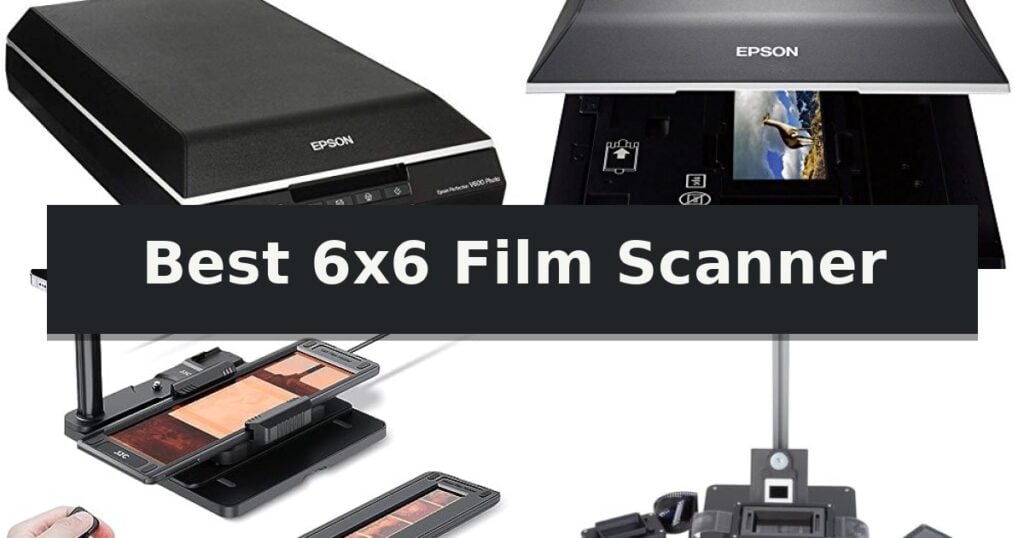
5 Best 6×6 Film Scanner in 2026 Reviews
Quick Comparison
| Product | Best For | Key Strength | Score |
|---|---|---|---|
| Epson Perfection V600 Photo Scanner | Best Overall | Built-in Transparency Unit for versatile film and slide scanning | 4.9 |
| Epson Perfection V550 Photo Scanner | Reliable Flatbed Film Digitization | 6400 dpi optical resolution for high-quality enlargements | 4.4 |
| JJC Mobile Film Scanner | Smartphone-Based Medium Format Scanning | Adjustable LED backlight with 11 brightness levels for precise exposure control. | 4.4 |
| Negative Supply Enthusiast Plus Kit | Professional Grade Film Digitizing | High CRI of 99 for accurate color rendition. | 4.5 |
| JJC Slide Mount Holder | Essential 6×6 Film Alignment | Magnetic closure design ensures negatives remain securely in place. | 4.7 |
How We Chose
Evaluating a 6×6 film scanner requires balancing image fidelity with workflow efficiency. As a reviewer, I focus on how effectively a device captures the nuances of medium format film, the reliability of its included film holders, and the integration of software tools that simplify the restoration of aging negatives.
- Optical resolution and sensor quality for detail retrieval
- Compatibility with 120 medium format film holders
- Inclusion of dust and scratch removal software or hardware
- Ease of setup and connectivity options
- Build quality and stability of the scanning platform
1 Epson Perfection V600 Photo Scanner — Versatile Medium Format Support
The Epson Perfection V600 Photo Scanner utilizes a built-in Transparency Unit to accommodate diverse film formats, including 35mm mounted slides and medium-format film up to 6 x 22cm. This design choice allows users to process multiple negatives or slides in a single session, providing a versatile solution for digitizing analog archives.
Engineered for high-resolution output, the device supports a maximum resolution of 6400 x 9600 dpi, enabling the creation of detailed enlargements up to 17" x 22". The inclusion of ReadyScan LED technology eliminates the need for a warm-up period, which contributes to faster scanning cycles and reduced power consumption during operation.
Workflow efficiency is supported by four customizable buttons that streamline tasks such as copying, emailing, and PDF creation. The scanner includes a comprehensive software suite featuring DIGITAL ICE technology for automated dust and scratch removal, alongside ArcSoft PhotoStudio and Easy Photo Fix for image restoration and enhancement.
The unit connects via Hi-Speed USB 2.0 and arrives with a complete set of film holders for 35mm and medium-format media. Its flatbed design also accommodates standard documents and photos up to 8.5" x 11.7", making it a multi-purpose tool for both photographic and archival document scanning needs.
Best for: Photographers and archivists requiring a versatile flatbed scanner capable of handling both standard documents and various film formats including medium-format.
Skip if: Users seeking a dedicated high-speed batch film scanner for large-volume 35mm negative processing may find the flatbed workflow slower than specialized film-only units.
- Built-in Transparency Unit for versatile film and slide scanning
- DIGITAL ICE technology for effective dust and scratch removal
- ReadyScan LED technology for instant-on operation
- High-resolution output up to 6400 x 9600 dpi
- USB 2.0 connectivity is slower than modern high-speed standards
- Flatbed scanning process requires manual placement of film strips
2 Epson Perfection V550 Photo Scanner — Reliable Flatbed Film Digitization
The Epson Perfection V550 Color Photo, Image, Film, Negative & Document Scanner provides a dedicated solution for digitizing film formats, featuring a built-in transparency unit specifically designed to handle 35 millimeter slides and negatives. This flatbed scanner utilizes 6400 dpi optical resolution, allowing for high-detail reproductions suitable for enlargements up to 17 x 22 inches.
Efficiency is central to the design, incorporating ReadyScan LED technology which eliminates warm-up time, allowing for immediate scanning upon activation. The unit also features Digital ICE technology, which is engineered to automatically remove the appearance of dust and scratches from film surfaces during the scanning process, reducing the need for manual post-processing.
For those managing large collections, the scanner includes auto edge detection, which can scan multiple photos simultaneously and crop them into individual files. The device supports 48-bit color depth for accurate color reproduction and includes ABBYY FineReader Sprint Plus OCR software to convert scanned documents into editable text formats.
Connecting via Hi-Speed USB 2.0, this scanner balances high-resolution output with user-friendly features like one-touch photo restoration. It is a versatile tool for users looking to preserve analog media with modern digital clarity.
Best for: Users needing a versatile flatbed scanner capable of digitizing both reflective documents and transparent film media like 35mm negatives.
Skip if: Users who require a dedicated high-speed drum scanner or those who exclusively need to scan large-format film larger than the built-in transparency unit's capacity.
- 6400 dpi optical resolution for high-quality enlargements
- Digital ICE technology for automated dust and scratch removal
- ReadyScan LED technology for zero warm-up time
- Multi-photo auto-cropping for increased productivity
- Flatbed footprint requires significant desk space compared to dedicated film-only scanners
3 JJC Mobile Film Scanner — Smartphone-Based Medium Format Scanning
The JJC Mobile Film Scanner offers a versatile approach to digitizing analog media by leveraging the high-resolution sensors already present in modern smartphones. This system features a heavy-duty metal base and an adjustable cellphone clamp holder, providing a stable platform for capturing 35mm and 120 medium format film negatives without the need for a dedicated, high-cost flatbed scanner.
Designed for precision, the unit includes a magnetic LED backlight that supports 11 levels of adjustable brightness, allowing users to fine-tune the illumination for different film densities. The universal phone clamp accommodates devices between 2.2 and 3.5 inches wide, utilizing rubber pads to ensure a secure grip while protecting the phone's finish. Users can slide the clamp holder up and down the stand to achieve optimal macro focal distances for their specific camera lens.
The system simplifies the digitizing process with a detachable wireless remote, which enables shutter activation without physical contact, thereby reducing the risk of camera shake during long exposures. The included film holders are constructed from ABS and feature a magnetic closure and transparent mask, ensuring negatives remain flat and properly aligned during the scanning process.
For added versatility, the base is equipped with a 1/4"-20 screw for mounting additional accessories, such as a selfie stick, and features anti-slip silicone pads to protect surfaces. While the hardware provides the necessary mechanical support and lighting, users must utilize third-party software, such as Snapspeed, to perform the final digital conversion of the captured images.
Best for: Photographers looking for a cost-effective, portable solution to digitize 35mm and 120 film using their existing smartphone camera.
Skip if: Users who require automated batch scanning or high-end professional color correction software integrated directly into the hardware.
- Adjustable LED backlight with 11 brightness levels for precise exposure control.
- Heavy-duty metal base provides a stable and durable foundation for scanning.
- Universal phone clamp fits a wide range of smartphones with or without cases.
- Detachable wireless remote prevents camera shake during the capture process.
- No included software requires users to source and configure third-party apps for image conversion.
- Manual alignment of the phone lens and film holder is required for every scan.
4 Negative Supply Enthusiast Plus Kit — Professional Grade Film Digitizing
Achieving high-fidelity digital captures of medium format film requires a stable platform and precise illumination to ensure the integrity of the original negative. The Negative Supply Enthusiast Plus Kit provides a comprehensive solution by combining a rigid riser system with specialized film carriers designed to maintain flatness and alignment across multiple formats.
At the heart of the system is the Basic Riser XL, which features a substantial 11.25 x 14.75-inch baseboard and a 26-inch working height. This design is engineered to minimize vibration during the digitizing process, a critical factor when working at the high magnifications required for 120 or 4×5" film. By providing a stable, elevated camera position, it allows for consistent focus throughout the frame.
The kit includes the Basic Film Carrier MK2s and a dedicated 4×5" Sheet Film Scanning Kit, ensuring that users can transition between 35mm, 120, and large format film without needing separate setups. To further maximize image quality, the included Stabilizing Masks apply necessary pressure to keep film strips perfectly flat, which is essential for reducing distortion and maintaining edge-to-edge sharpness.
Lighting is handled by the 4×5" Light Source Basic MK2, which boasts a high CRI of 99 for accurate color reproduction. This light source is designed to provide even illumination across the entire negative area, preventing hotspots or fall-off that could compromise the final digital file. The addition of an inline power switch simplifies the workflow, allowing for quick toggling of the light source without the need to disconnect the power cable.
Best for: Photographers who require a versatile, stable, and high-CRI lighting system to digitize 35mm, 120, and 4×5" film formats in a single workflow.
Skip if: Users with limited desk space or those who only require a simple, portable scanner for occasional 35mm use may find the footprint and complexity of this riser-based system excessive.
- High CRI of 99 for accurate color rendition.
- Robust 26-inch riser ensures minimal vibration.
- Versatile format support for 35mm, 120, and 4×5" film.
- Stabilizing masks maintain film flatness for consistent focus.
- Large footprint requires significant dedicated workspace.
- Manual assembly and setup complexity compared to standalone scanners.
5 JJC Slide Mount Holder — Essential 6×6 Film Alignment
Achieving precise alignment for medium format negatives requires a stable platform, and the JJC Slide Mount Holder is engineered specifically to simplify this process. By securing up to three 6×6 negative frames simultaneously, this holder prevents the shifting and shaking that often complicate the digitizing workflow, ensuring your film remains perfectly positioned for consistent results.
Designed for versatility, this mount is compatible with the JJC FDA-S2 and JJC MFN-K1 film digitizing adapter sets, while also functioning as a universal tool for standard flatbed film scanners. The unit features a magnetic closure design that snaps securely shut, protecting your film from accidental displacement during the scanning process.
Usability is a core focus of this design, as it requires no assembly to begin operation. Users simply place their slides into the aligned notches and close the edges to lock the negatives in place. The holder is constructed from sturdy, durable material intended to withstand continuous usage in a photography workflow.
When using this holder, ensure your 6×6 slide mounts do not exceed dimensions of 70.3 x 70.3 x 3.3 mm. This specific constraint is essential for maintaining the integrity of the fit within the adapter. Note that this package includes the holder only; slides and slide mounts are not included.
Best for: Photographers using digitizing adapters or flatbed scanners who need a secure, multi-frame alignment tool for 6×6 medium format film.
Skip if: Users working with film formats other than 6×6 or those whose slide mounts exceed the 70.3mm dimension limit.
- Magnetic closure design ensures negatives remain securely in place.
- Holds three 6×6 frames simultaneously for improved scanning efficiency.
- Constructed from sturdy, durable material for long-term use.
- Universal compatibility with standard flatbed film scanners and specific JJC adapters.
- Strict size limitations for slide mounts (maximum 70.3 x 70.3 x 3.3 mm).
- Requires careful handling to avoid catching fingers in the moving parts of the closure mechanism.
Best 6×6 Film Scanner Buying Guide
Flatbed vs. Camera-Based Scanning
Flatbed scanners are versatile devices that include a built-in transparency unit, making them a convenient all-in-one choice for digitizing various film formats and reflective prints. They are generally easier to set up and require less additional equipment to start scanning.
Camera-based scanning involves using a digital camera to photograph film mounted on a light source. This method is often preferred by photographers who already own high-resolution cameras, as it can yield superior sharpness and faster processing times for large archives.
The Importance of Film Holders
The quality of your film holder is critical for maintaining the flatness of your 6×6 negatives. If film bows or curls within the holder, parts of your image may fall out of focus, leading to inconsistent results across the frame.
Look for holders that use tension or magnetic closures to keep the film perfectly flat against the scanning surface. Proper alignment ensures that the scanner's sensor or your camera lens can capture the full detail of the medium format negative.
Resolution and Dynamic Range
Medium format film contains a significant amount of detail, so a scanner's optical resolution is a key specification. Higher resolution allows for larger prints and deeper cropping without sacrificing image quality.
Dynamic range determines how well a scanner can pull detail from the darkest shadows and brightest highlights of a negative. A scanner with strong dynamic range capabilities will produce more natural-looking digital files that require less post-processing.
Software and Restoration Tools
Many dedicated film scanners include software features like Digital ICE, which uses infrared light to detect and remove dust and scratches from the surface of the film. This can save hours of manual retouching in photo editing software.
Beyond hardware-based restoration, consider the ease of the scanning software interface. Intuitive controls for color correction, exposure adjustment, and batch processing can significantly improve your overall digitization workflow.
Workflow and Space Considerations
Consider the physical footprint of your scanning setup, especially if you have limited desk space. Flatbed scanners are self-contained units, while camera-based systems often require a riser, a light source, and a camera, which can occupy more room.
Think about your intended output volume. If you are digitizing a large collection, a system that allows for quick film loading and batch scanning will be much more efficient than one that requires manual adjustment for every single frame.
Frequently Asked Questions
Can I use a standard document scanner for 6×6 film?
No, a standard document scanner lacks the necessary transparency unit and backlight required to pass light through film negatives. You must use a scanner specifically designed for film.
What is the benefit of 6400 dpi resolution?
A higher optical resolution allows you to capture more fine detail from your film, which is essential if you plan to make large-format prints or perform significant cropping.
Does the Epson V600 work with Windows and Mac?
Yes, the Epson V600 is compatible with both operating systems, provided you install the appropriate drivers and software included with the device.
Is it better to scan at the highest possible resolution?
While high resolution captures more detail, it also results in very large file sizes. Scan at a resolution that balances your need for detail with your available storage capacity and intended output size.
Do I need special software for camera-based scanning?
You do not necessarily need proprietary software, but you will need an app or editing software to invert the negative colors and adjust the exposure to create a positive image.
Conclusion: Our Top Pick
Our top pick is Epson Perfection V600 Photo Scanner. Choosing the right 6×6 film scanner depends on your existing gear and the scale of your project. For most users, a flatbed scanner like the Epson V600 offers the best balance of convenience, software support, and image quality for medium format film.
If you are a professional or a dedicated enthusiast with a high-end camera, investing in a dedicated digitizing kit can provide a more robust and faster workflow. Assess your space and technical comfort level to ensure your chosen system fits your long-term digitization goals.