HASAKEE Q9s Drone is our top choice for the Best Drones for Children because its full-frame propeller protection and intuitive altitude hold make it exceptionally safe and stable for first-time pilots. The FLYVISTA V88 Mini Drone follows as a strong contender for those seeking optical flow positioning for added flight precision, while the sllcll ZJHWRJ003 Foldable Drone serves as a portable option for families who want a compact design for travel.
Selecting a drone for a younger user requires balancing performance features with physical durability. While advanced flight modes like 360-degree flips provide entertainment, the most critical factors remain the ease of takeoff and landing, the presence of protective guards, and the overall stability of the hovering system. These elements ensure that the initial learning curve is manageable and that the equipment can withstand the inevitable bumps associated with early practice sessions.
For those exploring the wider market, our guide to the Best Drones for Kids provides additional context on selecting age-appropriate flight toys. If you are interested in models that bridge the gap between toys and hobbyist equipment, our Best Starter Drones guide offers a deeper look at entry-level performance features.
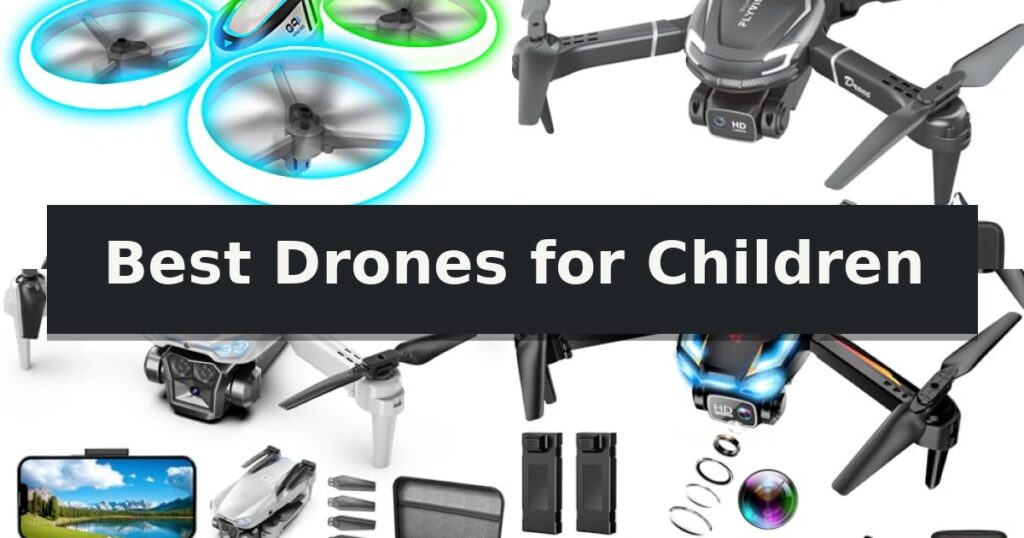
10 Best Drones for Children in 2026 Reviews
Quick Comparison
| Product | Best For | Key Strength | Score |
|---|---|---|---|
| HASAKEE Q9s Drone | Best Overall | Vibrant neon lighting with three display modes. | 4.9 |
| FLYVISTA V88 Mini Drone | Stable Optical Flow Positioning | Optical flow positioning for enhanced hovering stability. | 4.6 |
| sllcll ZJHWRJ003 Foldable Drone | Compact Design for Travel | Under 249g weight avoids complex FAA registration requirements. | 4.7 |
| Loiley X69 Camera Drone | High-Resolution Aerial Photography | 2K Ultra HD camera with remote adjustable angle. | 4.8 |
| Swifsen SWA35 Mini Drone | Superior Full-Frame Blade Protection | Full-frame blade protection prevents contact with moving parts from all angles. | 4.3 |
| Pallton X80 Foldable Drone | Intuitive Gesture-Based Controls | Two rechargeable batteries included for extended flight time. | 4.8 |
| SIMREX X41 Mini Drone | Crash-Resistant Structural Design | One-Key Takeoff/Landing simplifies the initial flight experience. | 4.9 |
| RELIDOL X62 FPV Drone | Extended Flight Time Performance | Extended 25-minute flight time with two included batteries. | 4.7 |
| Svqlo K500MAX RC Plane | Durable ABS Construction | Durable ABS construction provides superior impact resistance compared to foam models. | 4.3 |
| JoyRapt RC Plane | Flexible Foam for Impact Safety | Flexible solid EPP foam construction resists damage from impacts. | 4.9 |
How We Chose
Evaluating the best drones for children involves testing how well a model balances beginner-friendly controls with long-term durability. An experienced reviewer prioritizes safety features like propeller guards and stable hovering systems, which are essential for young users, while also assessing the reliability of battery systems and the intuitiveness of the remote interface to ensure a frustration-free experience.
- Propeller protection and structural durability
- Ease of takeoff, landing, and altitude stability
- Battery life and ease of replacement
- Flight control simplicity and headless mode functionality
- Portability and weight for potential registration requirements
1 HASAKEE Q9s Drone — Vibrant Neon Lighting Effects
The HASAKEE Q9s Drone distinguishes itself with a vibrant neon lighting system that emits green and blue hues across its entire frame, offering three distinct display modes for a vivid visual experience. This quadcopter is engineered with a focus on accessibility and safety for younger pilots, providing a manageable 6.9 by 6.9-inch footprint that is suitable for both indoor and outdoor flight environments.
Designed for ease of use, the drone features one-button take-off and landing along with an altitude hold function that allows it to hover automatically. Beginners can choose between three speed settings, while the headless mode simplifies navigation by eliminating the need to identify the drone's orientation during flight. These flight-assistance features reduce the learning curve for new pilots, allowing them to focus on basic maneuvering rather than complex orientation control.
Safety is prioritized through the inclusion of four sturdy propeller guards constructed from high-quality ABS material, which helps the unit withstand impacts during operation. This structural design choice is essential for protecting the propellers and surrounding surfaces during early flight attempts. To extend playtime, the package includes two 500mAh UL-certified batteries, effectively doubling the available flight time compared to single-battery setups.
Beyond standard flight, the HASAKEE Q9s Drone supports aerial maneuvers including 360-degree flips and auto-rotation functions. While these features add variety to the flying experience, the drone's lightweight construction and small size mean it is best suited for calm conditions, as high winds may impact its stability. This model serves as a dedicated entry-level platform that prioritizes flight mechanics and visual appeal over advanced photography or professional-grade sensors.
Best for: Younger pilots and beginners seeking a highly visible, durable, and easy-to-operate drone with extended flight time.
Skip if: Users requiring advanced camera capabilities or professional-grade GPS stabilization, as this model focuses on entry-level flight and lighting effects.
- Vibrant neon lighting with three display modes.
- Four sturdy propeller guards for enhanced safety.
- Two included batteries for double the flight time.
- Beginner-friendly controls including altitude hold and headless mode.
- No integrated camera for aerial photography or video recording.
- Small physical footprint may limit stability in high-wind outdoor conditions.
2 FLYVISTA V88 Mini Drone — Stable Optical Flow Positioning
Introducing a playful, shark-inspired aesthetic to the sky, the FLYVISTA V88 Mini Drone brings an engaging design to beginner-friendly flight. This compact unit is engineered to simplify the learning curve for children and novice pilots through a combination of automated flight assistance and intuitive controls.
At the core of its stability is an optical flow positioning system paired with a bottom camera lens, which helps the drone maintain a steady hover without constant manual correction. Beginners can utilize the one-click take off/landing function to manage the start and end of flights, while headless mode ensures the drone responds to directional inputs relative to the pilot, regardless of which way the nose is pointing.
The FLYVISTA V88 Mini Drone features a 1080P HD camera that can be manually adjusted by 90 degrees to capture wider perspectives. Through a Wi-Fi connection to a mobile device, users can access FPV (First Person View) functionality to watch real-time footage or capture media directly to their phone's album. The package includes two 1,800mah rechargeable batteries, providing a combined endurance of approximately 20 minutes of flight time.
For added versatility, the drone offers 3-gear speeds and a variety of flight modes, including one-click 360° flips, gravity sensing, and path flight. Safety is supported by integrated propeller guards and an emergency stop function, making it a practical choice for indoor practice or calm outdoor environments.
Best for: Children and beginners seeking a stable, easy-to-control drone with FPV camera capabilities for learning the basics of flight.
Skip if: Experienced pilots looking for high-speed performance, long-range capabilities, or advanced GPS-stabilized flight systems will find this model too limited.
- Optical flow positioning for enhanced hovering stability.
- Two-battery configuration for extended flight time.
- User-friendly controls including one-click takeoff and headless mode.
- Shark-shaped design specifically styled for children.
- Wind sensitivity limits outdoor use to calm conditions.
- Manual camera adjustment requires pre-flight positioning.
3 sllcll ZJHWRJ003 Foldable Drone — Compact Design for Travel
The sllcll ZJHWRJ003 Foldable Drone simplifies aerial photography for younger pilots by incorporating a 1080P HD camera with a 90-degree tilting lens, allowing users to capture diverse perspectives with ease. Designed for accessibility, this quadcopter streams FPV (First Person View) footage directly to a smartphone, providing a clear visual feed for indoor exploration or backyard flight.
Operating this device is straightforward, thanks to beginner-friendly flight modes such as One-Key Takeoff/Landing, Headless Mode, and Altitude Hold. The inclusion of propeller guards provides an essential safety buffer for novice users, while the three speed levels allow pilots to adjust the drone's responsiveness as their confidence grows.
Beyond basic flight, the companion app unlocks advanced capabilities like trajectory flight, gravity control, and gesture selfies. For those looking to add flair to their sessions, the remote features a dedicated button for executing 360-degree flips and rolls. The unit is powered by two rechargeable batteries that offer a combined 30 minutes of flight time.
Portability is a core feature of this model, as it weighs under 249g, which eliminates the need for complex FAA registration. The foldable design makes it easy to transport in the included case, ensuring it remains a convenient option for travel or spontaneous outdoor play for children and beginners.
Best for: Children and beginners aged 8–13 seeking an easy-to-fly, portable drone with integrated camera features for casual use.
Skip if: Users requiring professional-grade stabilization or extended flight times beyond 15 minutes per battery charge will find this model limiting.
- Under 249g weight avoids complex FAA registration requirements.
- Beginner-friendly controls including One-Key Takeoff and Altitude Hold.
- Included propeller guards enhance safety during initial practice sessions.
- Dual battery system provides up to 30 minutes of total flight time.
- Limited flight time of approximately 15 minutes per individual battery.
- Casual-use camera specifications may not meet the needs of serious photography enthusiasts.
4 Loiley X69 Camera Drone — High-Resolution Aerial Photography
Introducing the Loiley X69 Camera Drone, a compact aerial device designed to simplify the flying experience for beginners. This model features a 2K Ultra HD camera with a 90° remote adjustable angle, allowing users to capture clear aerial imagery and enjoy real-time panoramic views via a smartphone connection.
The drone prioritizes ease of use through optical flow positioning and Altitude Hold technology, which work together to maintain a stable hover for photography. Operation is streamlined with a one-touch start/land button, while the headless mode and gravity sensing allow for intuitive flight control by tilting the remote controller.
Portability is a key design choice, as the drone measures only 5 x 3 x 2 inches when folded, making it small enough to fit into a pocket or backpack. Weighing under 250g, it is designed for convenient transport during outdoor adventures. The package includes a portable bag and propeller guards to support safe usage.
Power management is handled by two rechargeable batteries, providing a combined flight time of approximately 26 minutes. The remote controller includes a low battery warning to help prevent loss during operation. Additionally, the manufacturer provides 24-hour technical support and a quality warranty to assist with long-term maintenance.
Best for: Beginners and travelers seeking a compact, easy-to-fly drone for casual aerial photography and video capture.
Skip if: Users requiring professional-grade flight stability, long-range transmission, or advanced obstacle avoidance sensors should look for more specialized equipment.
- 2K Ultra HD camera with remote adjustable angle.
- Compact, foldable design weighing under 250g.
- Optical flow positioning and Altitude Hold for stability.
- Two batteries included for extended flight time.
- Limited flight time of approximately 26 minutes total.
- Small form factor may be more susceptible to wind drift compared to larger drones.
5 Swifsen SWA35 Mini Drone — Superior Full-Frame Blade Protection
Introducing a drone designed specifically for younger pilots, the Swifsen SWA35 Mini Drone prioritizes safety through a unique, full-frame fan blade protection system. Unlike standard models that only shield the sides, this design includes an upper protective cover, effectively preventing children from touching the rotating blades from above while also protecting the unit from impact damage.
Operation is simplified for beginners with a one-click takeoff feature and an intuitive headless mode, which ensures flight directions remain relative to the pilot's orientation regardless of the drone's position. For added engagement, the quadcopter features multi-colored lights and supports advanced maneuvers like 3D flips, automatic rotation, and throw-to-go starts.
The system utilizes upgraded modular batteries that are designed for easier installation compared to traditional cable-based connectors. Users receive two batteries, providing a combined flight time of approximately 15 minutes. While the drone is capable of longer-range flight, it is recommended to keep operations within a 60-foot radius to maintain a stable connection and prevent loss.
To ensure consistent performance, the drone includes a straightforward calibration process. If a collision disrupts the flight path, simply placing the unit on a flat surface and triggering the one-click calibration on the remote control resets the internal sensors. This combination of protective housing and accessible flight controls makes it a focused choice for those new to remote-controlled aviation.
Best for: Younger beginners who require enhanced safety features and simplified flight controls for indoor or close-range outdoor play.
Skip if: Experienced pilots looking for long-range capabilities, high-definition video recording, or extended flight times beyond the 15-minute capacity.
- Full-frame blade protection prevents contact with moving parts from all angles.
- One-click takeoff and calibration simplifies the setup process for children.
- Modular battery design improves durability and ease of installation.
- Headless mode makes directional control more intuitive for novices.
- Limited 60-foot recommended range restricts flight distance.
- Short 15-minute total flight time with the included two batteries.
6 Pallton X80 Foldable Drone — Intuitive Gesture-Based Controls
The Pallton X80 Foldable Drone simplifies the learning curve for new pilots by incorporating one key takeoff and landing alongside altitude hold and headless mode. These features allow for stable flight management, enabling users to focus on navigation rather than complex manual adjustments during their first flights.
Equipped with a 1080P HD WiFi camera, this quadcopter captures aerial imagery with a 90-degree adjustable lens. The inclusion of gesture control allows for hands-free photo capture, while the app-based interface provides additional functionality such as gravity control and custom flight route drawing for a more interactive experience.
Designed for extended sessions, the package includes two rechargeable batteries that provide a combined flight time of up to 24 minutes. The foldable design ensures the unit remains compact for transport, fitting neatly into the provided carrying case for travel to parks or outdoor locations.
The drone offers three speed modes to accommodate varying skill levels, ranging from controlled indoor practice to faster outdoor maneuvers. Safety and maintenance are supported by the inclusion of four protective guards and four spare propellers, ensuring the hardware is well-equipped for initial flight training.
Best for: Beginners and children seeking an intuitive, portable drone for learning flight controls and capturing basic aerial photos.
Skip if: Users requiring professional-grade stabilization, long-range transmission, or high-end cinematic video quality will find the entry-level specifications of this model insufficient.
- Two rechargeable batteries included for extended flight time.
- Foldable, portable design with a dedicated carrying case.
- Intuitive flight aids like altitude hold and headless mode.
- Gesture-based photo capture for hands-free operation.
- Entry-level camera resolution limited to 1080P.
- Small physical footprint may be more susceptible to wind drift outdoors.
7 SIMREX X41 Mini Drone — Crash-Resistant Structural Design
The SIMREX X41 Mini Drone simplifies the learning curve for new pilots through its One-Key Takeoff/Landing functionality, which allows the aircraft to hover at a stable altitude automatically. This design choice removes the initial difficulty of manual throttle control, enabling children to focus on directional navigation immediately after unboxing.
Engineered for versatility, the drone features three adjustable speed modes that allow users to scale the flight intensity as their confidence grows. For added engagement, the unit includes 360° stunt flip capabilities and integrated Cool LED Lights, which provide visual feedback and aesthetic appeal during indoor or outdoor flight sessions.
Safety remains a core component of the SIMREX X41 Mini Drone architecture. The inclusion of Loss-of-Signal Protection ensures the aircraft initiates an automatic landing if the connection is interrupted, while Stuck-Rotor Protection helps mitigate potential motor damage during physical contact with obstacles. These features are intended to improve the longevity of the device during the inevitable learning phase.
This quadcopter is designed to be a self-contained, screen-free activity that encourages outdoor movement. With its compact dimensions of 7.6 by 5.43 inches and a lightweight build, it is portable enough for park use while remaining stable enough for living room practice.
Best for: Children and first-time pilots seeking a crash-resistant, easy-to-operate drone with built-in safety protections.
Skip if: Users who require advanced camera capabilities, GPS-assisted flight, or long-range outdoor performance beyond a toy-grade aircraft.
- One-Key Takeoff/Landing simplifies the initial flight experience.
- Stuck-Rotor Protection helps prevent motor damage during collisions.
- Three speed modes allow for skill-based progression.
- Loss-of-Signal Protection provides an automated safety landing.
- Toy-grade build is limited to casual, short-range use.
- No advanced camera features for high-quality aerial photography.
8 RELIDOL X62 FPV Drone — Extended Flight Time Performance
Introducing the RELIDOL X62 FPV Drone, a compact quadcopter engineered with a 1080P HD adjustable lens that captures high-quality aerial footage and selfies. Designed for accessibility, this foldable drone simplifies the flying experience for beginners through an upgraded hover system and one-key start functionality, ensuring stable flight performance without the complexity often found in larger aircraft.
This model prioritizes extended operation and safety, featuring two enhanced batteries that provide a combined 25 minutes of flight time. To assist new pilots, the unit includes propeller guards, a child lock feature, and an emergency stop function. Its lightweight, portable design means it requires no FAA registration, making it a versatile choice for both indoor practice and outdoor exploration.
Beyond basic flight, the RELIDOL X62 FPV Drone offers diverse control options, including a dedicated remote and APP control for real-time HD video streaming. Users can engage in advanced maneuvers like 3D flips, gravity sensing, and waypoint flight via the app. The inclusion of voice instructions and gesture control for photo and video capture adds an interactive layer to the flying experience.
To ensure a successful start, the manufacturer recommends practicing in a windless indoor space at a low altitude. The package includes spare fan blades and detailed instructions to support maintenance and skill development. With its Altitude Hold and Optical Flow sensors, the drone maintains precise positioning, providing a reliable platform for users to learn the fundamentals of drone operation.
Best for: Beginners and children looking for a stable, feature-rich drone that includes safety guards and extended battery life for learning to fly.
Skip if: Users seeking professional-grade cinematography equipment or long-range outdoor flight capabilities will find the size and sensor limitations of this mini drone restrictive.
- Extended 25-minute flight time with two included batteries.
- Safety-focused design featuring propeller guards and a child lock.
- Versatile control options including gesture, voice, and app-based commands.
- Stable hovering technology using optical flow and altitude hold sensors.
- Indoor-optimized performance requires windless conditions for best results.
- App-dependent features are required to access advanced flight modes.
9 Svqlo K500MAX RC Plane — Durable ABS Construction
Introducing aerial excitement to playtime, the Svqlo K500MAX RC Plane distinguishes itself with a durable ABS body designed to withstand the inevitable bumps and crashes that come with learning to fly. Unlike foam-based alternatives, this construction provides enhanced strength and a realistic finish, making it a robust choice for young pilots.
The Svqlo K500MAX RC Plane simplifies the learning curve with beginner-friendly controls that utilize dual joysticks for intuitive steering. It features one-key takeoff and landing capabilities, alongside specialized flight modes like 360° flips in all four directions and orbit modes. These features allow children to perform stunts easily, though the flip function automatically disables when battery voltage is low to ensure flight stability.
To keep the action moving, the package includes 2 rechargeable modular batteries, each offering up to 7 minutes of flight time. The quick-swap design allows for minimal downtime between flights. For low-light environments, the aircraft is equipped with 4 bright LED lights that provide visibility and an eye-catching visual effect during operation.
With a flight range of 100 yards, this model provides enough space for outdoor practice. The package arrives in a premium gift box, making it a straightforward choice for birthdays or holidays. Users should note that the remote controller requires 3 AAA batteries, which are not included in the box.
Best for: Children aged 8 and up who are interested in learning basic flight maneuvers and performing aerial stunts with a durable, easy-to-operate remote control aircraft.
Skip if: Users looking for long-duration flight times or advanced, professional-grade drone photography capabilities, as this model is designed specifically for short-burst recreational play.
- Durable ABS construction provides superior impact resistance compared to foam models.
- Includes 2 rechargeable modular batteries for extended playtime.
- Features one-key stunt and flight controls for beginner accessibility.
- Equipped with 4 bright LED lights for improved visibility.
- Requires 3 AAA batteries for the controller, which are not included.
- Limited flight time of approximately 7 minutes per battery.
10 JoyRapt RC Plane — Flexible Foam for Impact Safety
The JoyRapt RC Plane prioritizes safety and durability for young pilots through its flexible solid EPP foam construction, which is designed to rebound after accidental bumps or falls during indoor and outdoor flight. This structural choice ensures the aircraft remains playable even after repeated impacts, making it a practical introduction to remote-controlled aviation.
Equipped with four propellers covered by exclusive protective casings, this model minimizes risks associated with spinning blades. The aircraft features one-key takeoff and landing functionality, simplifying the learning curve for children who are just starting to navigate flight controls. Its three adjustable speed levels allow users to scale the difficulty as their piloting skills improve.
For nighttime visibility, the plane includes bright LED lights that create glowing trails during aerial maneuvers. The inclusion of gravity sensing and the ability to perform 360-degree flips and aerobatic rolls provides a versatile experience for users interested in practicing specific flight stunts. The modular battery system supports 6–8 minutes of flight time per charge, with dual-battery options available to extend playtime.
The JoyRapt RC Plane arrives ready for immediate use without requiring complex assembly. While the package includes the aircraft, remote, and rechargeable batteries, it is important to note that 3 AA batteries for the remote are not included and must be purchased separately. This model is recommended for children aged 6 and up, offering a balance of accessible controls and engaging aerial features.
Best for: Children aged 6 and up who are interested in learning basic flight maneuvers and aerial stunts with a durable, foam-based RC aircraft.
Skip if: Users seeking a high-speed professional-grade drone or those who require longer flight times beyond the 6-8 minute per-battery capacity.
- Flexible solid EPP foam construction resists damage from impacts.
- Protective propeller casings enhance safety during operation.
- One-key takeoff and landing simplifies the user experience for beginners.
- Integrated LED lights allow for visibility during night flights.
- AA batteries for the remote are not included in the package.
- Limited flight time of 6–8 minutes per battery requires frequent recharging.
Best Drones for Children Buying Guide
Safety and Durability Features
The most important consideration for any drone intended for children is the physical protection of the spinning blades. Models with full-frame propeller guards or enclosed designs significantly reduce the risk of injury and prevent damage to the drone during collisions with walls or furniture.
Beyond blade protection, the materials used in the chassis impact longevity. ABS plastic and flexible EPP foam are common choices because they can absorb the energy of a crash, allowing the drone to remain functional after repeated impacts rather than cracking or breaking.
Flight Stability and Control
Altitude hold is a non-negotiable feature for beginners. This technology allows the drone to maintain a consistent height automatically, which lets the pilot focus on steering rather than constantly adjusting the throttle to keep the aircraft from dropping or climbing unexpectedly.
Headless mode is another essential function that simplifies navigation. By ensuring the drone moves relative to the pilot's orientation rather than its own front-facing direction, it eliminates the common confusion that occurs when a drone rotates in mid-air.
Battery Management and Flight Time
Most entry-level drones offer limited flight time per charge, typically ranging from 5 to 15 minutes. Choosing a model that includes multiple batteries is a practical way to extend playtime, as it allows for a quick swap once the first battery is depleted.
Modular battery designs are preferable to hard-wired internal batteries. They are easier for children to install and remove independently, and they often use more robust connectors that are less prone to breaking during the frequent charging cycles required for regular use.
Camera Capabilities and FPV
While many drones for children include cameras, the quality and utility vary significantly. Models with 1080P or 2K resolution provide clearer images, but the primary benefit for a young pilot is often the First-Person View (FPV) capability, which streams the video to a smartphone.
It is important to note that camera-equipped drones often require more careful handling. Features like optical flow positioning can help keep these drones stable for better photography, but they may add complexity to the setup process compared to non-camera toy drones.
Portability and Regulations
Foldable designs are highly advantageous for families who plan to take their drones to parks or on trips. These models collapse into a compact form factor, often fitting into a pocket or a dedicated carrying case, which protects the sensitive components during transport.
Weight is also a factor to consider for outdoor use. Drones weighing under 250 grams are generally exempt from many complex registration requirements, making them a more convenient choice for casual hobbyists and younger users who want to fly in various outdoor locations.
Frequently Asked Questions
Are these drones safe for young children?
Yes, provided they feature propeller guards and are used under adult supervision. Always check the manufacturer's recommended age range and ensure the drone is operated in an open, safe environment.
Do I need to register these drones with the FAA?
Most of the models featured here weigh under 250 grams, which typically exempts them from FAA registration requirements for recreational use. However, always verify current local regulations before flying.
How long do the batteries last?
Flight times vary by model, typically lasting between 5 and 15 minutes per battery. Most models come with two batteries to double the total flight time.
Can these drones be flown indoors?
Yes, these mini and foldable drones are designed for indoor use. It is recommended to clear the area of fragile items and start in a space with enough room to maneuver.
What is headless mode?
Headless mode allows the drone to move in the direction the remote control joystick is pushed, regardless of which way the front of the drone is facing, making it much easier for beginners to fly.
Conclusion: Our Top Pick
Our top pick is HASAKEE Q9s Drone. Choosing the right drone for a child involves prioritizing safety and ease of use over advanced technical specifications. Models with robust propeller guards, altitude hold, and simple one-key controls provide the best foundation for learning to fly while minimizing the risk of damage or injury.
By selecting a durable, beginner-friendly option, you can ensure that the experience remains fun and engaging. Always supervise initial flights to help the pilot gain confidence and learn the basic controls in a controlled environment.